Friday, May 31, 2019


Unit Three Blog Post
            For this blog post, I want talk about some of the subjects that were brought up in the 2 Dope Queens podcast. One of fabulously fun things about the 2 Dope Queens podcast is the array of pop culture subjects that Phoebe Robinson and Jessica Williams talk about and make fun of. While a lot of the stuff that Robinson and Williams talk about seems delightfully random, I think it is worthwhile to extend upon some of the topics that they discussed.
1.Yarling
            On the episode, “Creed’s Greatest Hits” there is an anecdote about being trapped with a Lyft driver who was playing the entirety of “Creed’s Greatest Hits.” This situation sounds like the thirteenth labor of Hercules. If I was in this situation, I would probably do this:


Anyway, this naturally led to a discussion about the distinctive singing style that was popular in the late 90s and early aughts, yarling. Yarling is a lot like the dodo bird. We know that it was odd, we know that it existed, but we are not really certain why. Much like the dodo bird, it seems to be an extinct species. People use the term “deader than disco” but disco still has its musical DNA on a lot of current music. For instance, Daft Punk is highly indebted to disco. Yarling on the other hand, has pretty much disappeared. Besides, saying “deader than yarling” is a lot more fun.
            Williams and Robinson recite an impressive list of singers who performed yarling. Believe it or not, there is an even longer list out there! Here is the link below:

I disagree with them that Lana Del Ray has a yarling singing style. Rey is more of a David Lynchian crooner type. A more applicable female to yarling would probably be Alanis Morrissette. This is a hill that I’m willing to die on. It isn’t much of hill. It’s more like those inexplicably giant piles of dirt that appear on construction sites next to the porta johns. Regardless, I’m still sticking to it.
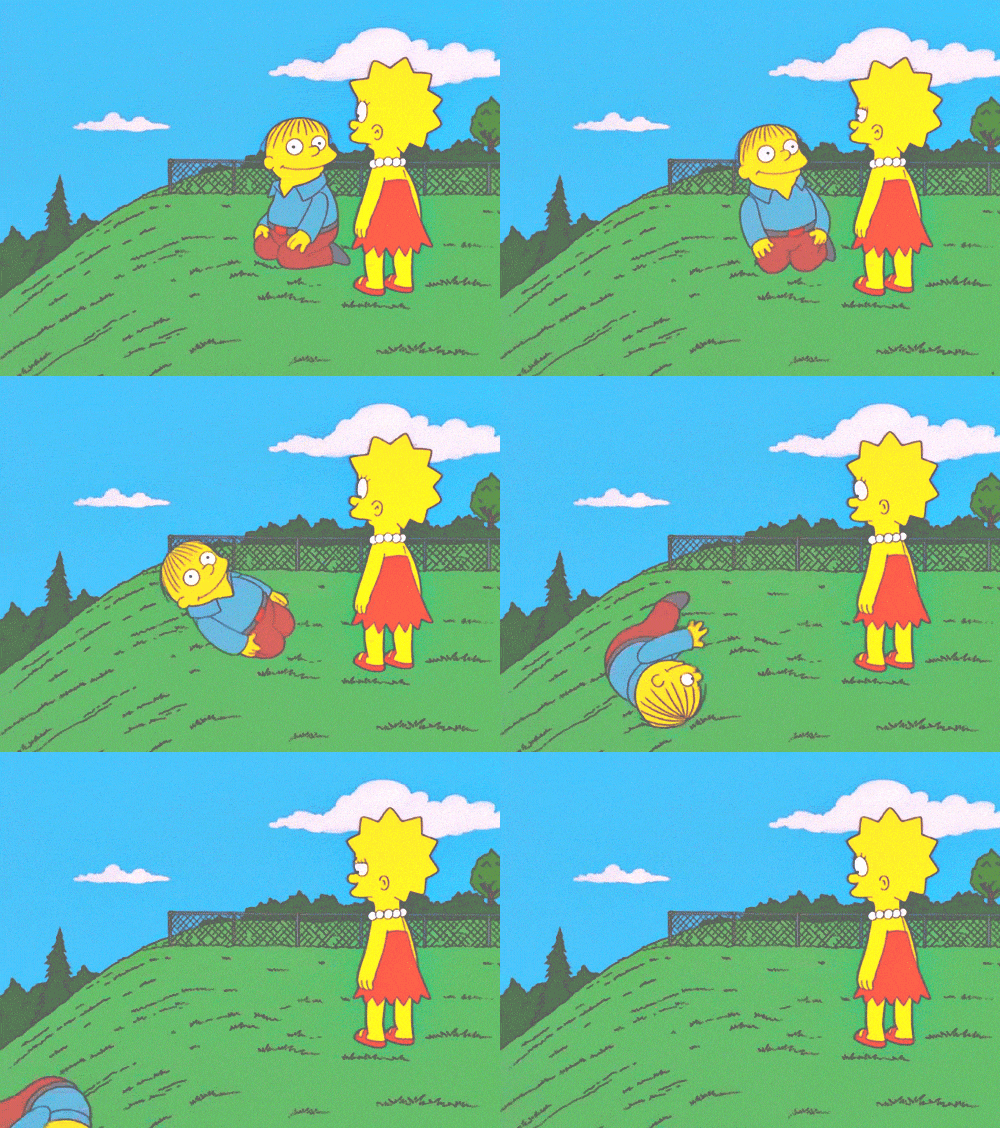

           Let's end this paragraph with a parody of yarling, shall we? The link is below:
2. Famous People with Names That Sound Like They Were Invented by People Who Secretly Write Downtown Abbey Fanfiction on the Weekends (Not That there is Anything Wrong With That.)


On the podcast episode, “Who is Jeff Tweedy?” Williams, Robinson, and Fred Armisen talk about how Jeff Tweedy’s name seems like something somebody just made up, because it makes one think about Tweety Bird. This kind of reminds of Tina Fey’s “Rick Fenderman” in Bossypants (144), (although Rick Fenderman was made up.) I wonder if anybody who out there who is actually named Rick Fenderman. I wonder if the real Rick Fenderman read Fey’s book, and exclaimed “Hey! That me! Wait a minute…” Jeff’s last name, Tweedy, makes me think of fancy jackets made of heavy woolen fabric. Kind of like the suit pictured below.


        Anyway, it got me thinking about famous people with names that sound fictitious but are actually real. Here is my personal list below:
 1.      Albert R. Broccoli
        Broccoli, Albert Broccoli. Broccoli was an American producer who helped to make the James Bond movies possible. His daughter's name is Barbara Broccoli.
 2. Jarvis Cocker
       Jarvis Cocker is the frontman for the British band, Pulp. They have a song called "Common People" that is very catchy. William Shatner did a ridiculous cover of it, where he inexplicably placed a lot of emotional emphasis on the word "roaches." Here are links to both of them below:
3. Dr. Harry Coover
      Dr. Harry Coover invented Super Glue. Many art students and craft hobbyists should be grateful  for his invention. You can read all about it at the sexy and thrillingly action packed Glue History website.
4. Ima Hogg
       Ima Hogg was philanthropist, patron and collector of the arts. She did not have a sister named Ura.
5. Edward Bulwer-Lytton
       Edward Bulwer-Lytton was a British writer and politician. Was Bulwer-Lytton a good writer? God, no! However, the legacy of his terrible writing remains with the satirical literary contest, the Bulwer Lytton Fiction Contest. The Bulwer Lytton Fiction Contest challenges every "man, woman, and (precocious) child to write an atrocious opening sentence to a hypothetical bad novel." This contest features many funny women from around the world. Here is a link to the winners of the contest:
      In closing, I want to hear your thoughts. Is yarling still a thing? Should horses have designer wardrobes? 
Citations:
https://www.wnycstudios.org/story/2-dope-queens-podcast-bonus-episode-creeds-greatest-hits
https://www.wnycstudios.org/story/2-dope-queens-podcast-episode-36-who-jeff-tweedy
Fey, Tina. Bossypants. Little, Brown and Company. 2011.

Thursday, May 30, 2019

Unit Three - Beauty and Performance

Something that stood out to me while reading Phoebe Robinson's You Can't Touch My Hair was the tension between dressing up for one's self versus trying to look good for the rest of society. The issues that Robinson discusses are very specific to black culture, granted, but the mentality that she associates with her presentation can apply to more than black hair.

One issue that's gotten some attention from mainstream feminists, though it has died down some recently, is whether or not it's feminist to wear makeup. Heavy makeup, revealing clothes, and complicated hairstyles have at times been looked down upon and reduced to performances aimed at attracting male attention. While this discussion had died down some as feminists began to agree that women who wanted to wear makeup should, and that what was important was being able to choose for one's self, the argument has resurfaced, especially as a way to denigrate trans women who some TERFs (trans exclusionary radical feminists) have claimed reinforce gender stereotypes by adhering to hyper-feminine styles in an effort to be recognized.

The issue can be conflicting even for women in relatively privileged demographics (such as white women, particularly upper-middle class white women). YouTuber ContraPoints, or Natalie Wynn, discusses some of these tensions in her video "Beauty." In particular, she talks about her experience getting facial feminization surgery (FFS), why it was important to her to get it, and societal views on both plastic surgery and makeup.


While I encourage watching the full video, it's fairly lengthy, so I'll highlight a few parts. Wynn's surgery is a more extreme (and expensive) example of the lengths women go to in order to match society's standards, but some of her experience and quite a bit of her feelings towards it overlap with Robinson's trials with her hair. Wynn describes the procedure as, "it cost a lot of money, the anticipation was, oh, terror like I've never known, the pain was memorable, and the recovery took more than a month" (03:35-03:43). Robinson, on the other hand, describes a continuous experience from a young age where her hair would be straightened, including using a hot comb which she relates could burn her if she wasn't still as her mother ran it through her hair. Robinson remarks, "If you're thinking that's a lot of responsibility for a very young person—to stay still as a piping-hot piece of metal hovers mere inches from your scalp—you are correct" (12). Both women had very different experiences, and yet both demonstrated their willingness—or perhaps how they were pressured—to endure pain for the sake of their looks.

The idea that women will go to great lengths and pains for their beauty is hardly a new one, and Wynn addresses an often asked question, asking, "Why would someone do what I just did?" (05:11-05:14). She mentions some of the usual answers: pleasing men, pleasing society, and for trans women, reaffirming one's identity. The evidence would seem to point towards societal standards and the approval of others being at the core of these practices, but Wynn posits a different answer, asserting that while societal influence is unavoidable, the core of her desire to get FFS was a desire to be beautiful—by society's standards, yes, but largely for herself.

I could go more in depth on Wynn's argument, but I think that's enough summarizing. The reason this topic appealed to me was because it's a very familiar conflict. The "self-doubt, shame, embarrassment, and confusion about who they should try to be and whether it's better to fully be themselves or not" (7) that Robinson describes when talking about black hair is something all women feel. I won't say it's the same experience, because a black woman's experience of having her appearance criticized is very different from a trans woman's experience or a white cisgendered woman's experience; we all experience varying degrees of pressure from society to perform in a certain way, and vulnerable demographics will always be more affected than the more protected ones. What I want to discuss, though, is the conflict. At what point are we acting for ourselves, and at what point are we acting for others? How do we find a balancing act in "a society that pressures women to be beautiful while simultaneously belittling them for caring about it" (Wynn 10:12-10:18) where we can be accepted by others while still accepting ourselves? Unfortunately, for the end of this post, I don't have an answer to that question. I've survived the last few years of my life avoiding skirts, dresses, and makeup, because I was convinced that being feminine and being myself would only undermine my goals in life. As Wynn says, "smart people aren't supposed to care about beauty" (09:06-09:09), and I always wanted to be smart a lot more than I wanted to be beautiful.

I'm starting to wonder why I can't be both.

Unit Three Post - What Cultural References Define a Generation: Phoebe Robinson and the Gay Rat Wedding

Since reading selections from Phoebe Robinson's book You Can't Touch My Hair, I have been pondering cultural references, in literature and in life. To me, one of the most defining characteristics of Robinson's writing is her ability to stay both relevant and entertaining by tying in references to pop culture. I love pop culture. And academic writing. And where the two collide. So Robinson's style gets a big yes from me. 

Recently, a controversial episode of the children's television show Arthur has become a big deal on the internet (or as the kids call it, gone viral). This episode, entitled "Mr. Ratburn and the Special Someone", was taken off the air in Alabama following conservative pressure. You can read about it all here. Fast forward a few days, and the Gay Rat Wedding (hereafter referred to as the GRW) went viral, resulting in memes, jokes, and political satire. This morning, after falling asleep last night pondering the writing of Phoebe Robinson, I saw the following tweet.


You're probably wondering what Phoebe Robinson has to do with the GRW, so I'll get to it. I have to say, I'm really liking the acronym "the GRW." Is the GRW the new GOP? 

So after reading Phoebe Robinson and her discussion of the pop culture and media references that framed her youth, I started asking myself which pop culture references defined my youth. What about me right now? Me in ten years? What if I had to pick a few media references to define "my generation"? I'm sorry but I thought about the GRW. It reeks of everything that our society is preoccupied with at the moment: archaic laws and the separation of church and state issue, meme culture, our fascination with television and reality and the line separating them... 

In light of my thoughts on Phoebe Robinson and the GRW, I thought I would try to come up with a few pop culture references that I believe are in some way definitive of my youth. 

When I think about my childhood, I remember my fascination with certain very specific, weird, things and people. One of those things/people was Hillary Duff, known to me back then as Lizzie McGuire. My cousin and I both had underwear with Lizzie McGuire on them.  In retrospect this is slightly odd, maybe more so than having, for example, Spider-Man, on your underwear. Mine looked like this. 


Also, if you were considering googling "Lizzie McGuire underwear", don't do it. Just don't. 

We all wanted to be Lizzie McGuire. She had a cartoon version of herself, which helped her express her frustration when things went wrong with her love interest or her grades. She also had an alter ego who was an amazing singer, AND she got to travel to Italy. So basically, I was crazy jealous. If I had to bury a time capsule from the early 2000s, it would definitely have cartoon character underwear in it. 

On the other hand, sometimes what can define a generation (or a childhood) isn't something that everyone necessarily likes, like Lizzie McGuire and her printed underwear, but something that people just constantly reference. When I think of something that people constantly referenced when I was a kid, it would have to be Janet Jackson's boob. 

Okay, that came off wrong. Just to be clear, I think Janet Jackson is super cool. And so are boobs. And at this point in my life, I don't consider either one shocking enough to be something I think about a lot. However, looking back, the wardrobe malfunction that occurred during the halftime show of Super Bowl XXXVIII was mentioned constantly when I was younger. If your shirt was looking a little low-cut, someone would be like "You don't wanna pull a Janet, do you?" 

Here are Janet Jackson and Justin Timberlake rocking out, pre wardrobe malfunction. 


As a young person, I didn't really understand the significance of the malfunction. I only talked about it because adults talked about it, and kids copy adults. Fifteen years later, I think that our preoccupation with the wardrobe malfunction incident says a lot about how our society treats women - as a child I thought literally the worst thing you could do was show your breast on live television. 

As an adult, I'm not in favor of or against breasts on television. I'm just not thinking it's a huge deal. Hopefully, we have gotten past this preoccupation, at least a bit. Also, don't google "Janet Jackson boob" either (although you might get some delightful google suggestions for "Stretch jeans for all sizes", "Gorgeous Purple Nail Polish Shades" and "Delicious fruit snacks here").  

Lastly, as a visual person, I think that a big part of my childhood was the cringey fashion. I'm talking ~ Frosty Eyeshadow ~


 ~ Butterfly Clips ~


And ~ Dresses ~ Over ~ Jeans ~


And also, remember when Kim Kardashian wore mom dresses and was a rep for Charmin?


Those bears are downright terrifying. 

To be clear, this is a random sampling of the cultural moments that defined my childhood. So, don't be too worried about me. And please, drop me a line about the cultural moments that were defining for you. Here's to telling our kids about the GRW. 


"Tiffany Haddish Secretly Recorded What People Said About Her After Auditions"

Thought this story might be of interest to this group! Feel free to comment away!

"Tiffany Haddish Secretly Recorded What People Said About Her After Auditions"

I'll go first: I would love/hate/love to hear these...

Unit 3: Expanding on the Vagina topic from Robinson

What? A woman uncomfortable with the word vagina? Yeah I am sometimes. Why? I have no idea. BUT Robinson helps me understand the whole awkwardness behind the word and why the stigma should change!

In Robinson's book, on page 109 she talks about the demands she would make if a female were to become President of the United States -- one of which would be to make the world comfortable with the word vagina. After explaining the ridiculousness behind the uncomfortableness of the word, she talks about our use of the word pussy in terms of relating it to something weak.

First of all, I love this section. Other than enjoying reading this book, it also helped me to analyze certain things I had never thought about before.

She says "Pussies, excuse me, vaginas, shouldn't be the symbol of 'bad' behavior; the symbol should be Donald Trump and his Cheetos-dust skin tone."

This of course made me laugh. Not going to get into politics here, but I totally agree that the word should not be used as a slur for weakness or putting someone down.

My point is that if we cant talk about the things that make us uncomfortable, as in the description she gives about the scenario on the House floor when Lisa Brown was silenced -- then the knowledge we have about a topic will not grow. If that is the case, the usage of the words begin to be confused and used in inappropriate ways.

It could all be solved if we'd talk to each other kindly -- but in the meantime the importance of using correct terminology for correct insults needs to be stressed as well.

What do y'all think about this? Is stressing this use of not using these words insults a waste of time? Do any words make you uncomfortable? Why?


P.S. Thanks everyone who helped with the gif question. You guys rock!

Tuesday, May 28, 2019

Unit Two: Stereotypical Portrayals in Tv

After reading Mindy Kaling's chapter "Coming this fall," it got me thinking about the stereotypical roles women have been cast as. It seems as if all the same roles have been reassigned to different actresses as time goes one. More first observation is that all most women are seeking a man, and it is rare if the show or movie ends with the woman being satisfied on her own. Just about every romantic comedy I can think of starts out like this. Like the movie He's Just Not That Into You, all of the women are almost desperate for the affection of their male counterpart, who, like the title indicates, is not that into them. Kaling almost suggest that her show is a bit stereotypical as well in that she compares The Mindy Project to the hypothetical show she mentions at the end of this chapter called "Talkative Chubster Seeks Husband." I think Kaling herself is typecast as a character who is desperate for love.
Related image
Mindy Kaling as Kelly in The Office
Also on the topic, of stereotypes, I see many racial stereotypes in tv as well. Kaling brings this up in "Poor Maria," which is basically the premise to Maid in Manhattan. Maria a Hispanic trope in that she is a cleaning lady for a rich, white CEO. She also seems to want a romantic relationship with him as well. Hispanic women have been typecast this role several times. For instance, in the ABC Family show, The Secret Life of an American Teenager, depicts Adrian as the lusty, sexy, Latina who will do anything to win back her man.
Image result for secret life of the american teenager cast
Adrian pictured far right


Kaling also makes another interesting point when she mentions the "candid black best friend." I see this all the time! So many movies depict a black best friend for the white main character. I guess this is some film makers way of showing "diversity." Typically, they are seen as the comedic relief. Both Netflix movies Sierra Burgess is a Loser and A Christmas Prince depict racially stereotypical friends. In the first film, Sierra is friends with Dan, a goofy, black gay man who continues to give her advice. As for The Christmas Prince, there is a number of racial tropes at play here. The main character's two best friends include a sassy yet sensible black woman, and a playful, gay Hispanic male. Then during her wedding, there is a shameless depiction of an flamboyant, Indian fashion designer. Why does it seem like the only ethnic characters in film are overly exaggerated racial tropes? Why are women only focused on finding romance? Kaling brings this issue of stereotyping to light in her chapter. I think there needs to be more representation of ethnic characters in film without it being deemed as an "ethnic" film. It feels as if I am watching the same movies over and over again yet they claim to be original. I would like to see more films that show independent women and that they don't need to find love at the end in order to be happy. Also, I think it is important to incorporate more diversity without them being side characters or comedic reliefs. 

Blog No.03

Arguing With Myself...And Other Pastimes (Leftover Thoughts)


I wrote my response paper about Swink's text and how Alexandra Rowe's makes an important point about what is expected of female comics versus male comics. Rowe's conclusion is that women should not be limited to being likable because the same is certainly not expected of their male counterparts. In my paper, I bring up funny people like Ricky Gervais and David Letterman as examples of how being unpleasant can work in the favor of male comics.

All that being said... Let me now try to pick my argument apart. I guess the best stance I can take against myself is that there are quite a few disagreeable female comedic characters. Ron Swanson's ex-wife, and malevolent librarian Tammy is a perfect example of the villainous female comedic character, but it is worth observing that she is also hyper-sexual and exhibits a complete control over the otherwise immovable Ron, that hints towards there being more to Tammy than meets the eye.

The issue is Liz Lemon is not at all a villain. She simply has human reactions to ridiculous, trying situations. Neither show is rooted entirely in reality. I have always felt that sit-coms exist in the same realm as Magical Realism. They are not entirely removed from reality, but they exist in an enhanced, more elastic version of it. Lemon faces the same real struggle that women (a lot of men also want children) face on a constant basis: prioritizing work and a personal life. Of course, the two are not always opposed, but their are only so many hours in the day. There must be a give and take somewhere.

The last issue I had with Swink's audience and their perception of Liz Lemon is that her ending was a happy one! She had to struggle to get their, but she adopts children with her Kris and they grow up to work at 30 Rock with the immortal Kenneth Parcel, who we find eventually makes his way to Jack's position. Is it so disagreeable to be confronted with the reality that we must take choices in life? Liz Lemon succeeds in balancing her personal development with her career, but I guess she didn't smile the whole time. Does that void the whole thing? Of course not. I am in favor of human heroes and Liz Lemon is just that.